Press and brand
Assets and words you can reuse.
Everything on this page is free to use when you write about PATINA. The one rule that really matters is not to imply we endorsed something we did not.
The descriptions below are the ones we would write ourselves, so copying them costs you nothing and gets the facts right. The files are hand authored SVG and need no licence, no attribution line and no email to us.
If you are on deadline
Five lines- What it is
- A Bitcoin protocol. An artifact points at one unspent output, and its depth is the number of blocks that output has stayed unspent.
- The unit
- Blocks, never days. Any figure in days is an estimate at ten minutes per block.
- The reset
- Spending the carrier ends the stretch and depth returns to zero, including when the artifact is sold.
- The economics
- No mint price, no supply cap, no team allocation, no reserve.
- Who runs it
- Built by Bitcoin Universe. Nobody, including us, can pause the protocol, freeze an artifact or reverse a spend.
01 Words to lift
Two descriptions, written to be pasted.
One paragraph for a caption or a link preview, and a longer one for a piece that has room to explain the mechanism. Both are accurate as written, so shortening them is where mistakes usually creep in.
One paragraph
PATINA is a Bitcoin protocol that marks one unspent output as the carrier of an
artifact. The artifact's depth is simply the number of blocks that output has
stayed unspent, so it deepens on its own and resets to zero the moment the
output is spent. That reset is inherited from Bitcoin's own model rather than
enforced by anyone, because spending an output destroys it. Each completed
stretch is engraved permanently as a ring. The genesis asset, the Firstlight
Seals, is minted for network fees only inside a single window of 4032 blocks,
with at least 100 000 sats of the minter's own bitcoin sealed inside as an
endowment that stays theirs.
The longer one
PATINA is a Bitcoin protocol for artifacts that measure one thing: how long an
output has been left alone.

An artifact points at exactly one unspent output, its carrier. Depth is the
current block height minus the height at which that carrier was created, so it
is a subtraction any Bitcoin node can perform, with no index and no trusted
party. Depth is never stored, only computed when asked. Eight named tiers mark
ranges of depth, from Raw at zero through Sheen, Cast, Verdigris, Umber,
Bronze and Oxide to Elder at 210 000 blocks.

Spending the carrier ends the stretch. Nothing enforces that reset, because
nothing has to: a spent output no longer exists, and a destroyed output has no
age. What remains is a ring, a permanent record of where the stretch started
and ended, how deep it went and what value it carried. Rings accumulate and
cannot be removed. The artifact then continues on a successor output at depth
zero, or becomes a relic if the spend left nothing eligible behind.

The genesis asset is the Firstlight Seals. They can be claimed only inside a
single window of 4032 blocks, with no price, no cap, no reserve and no
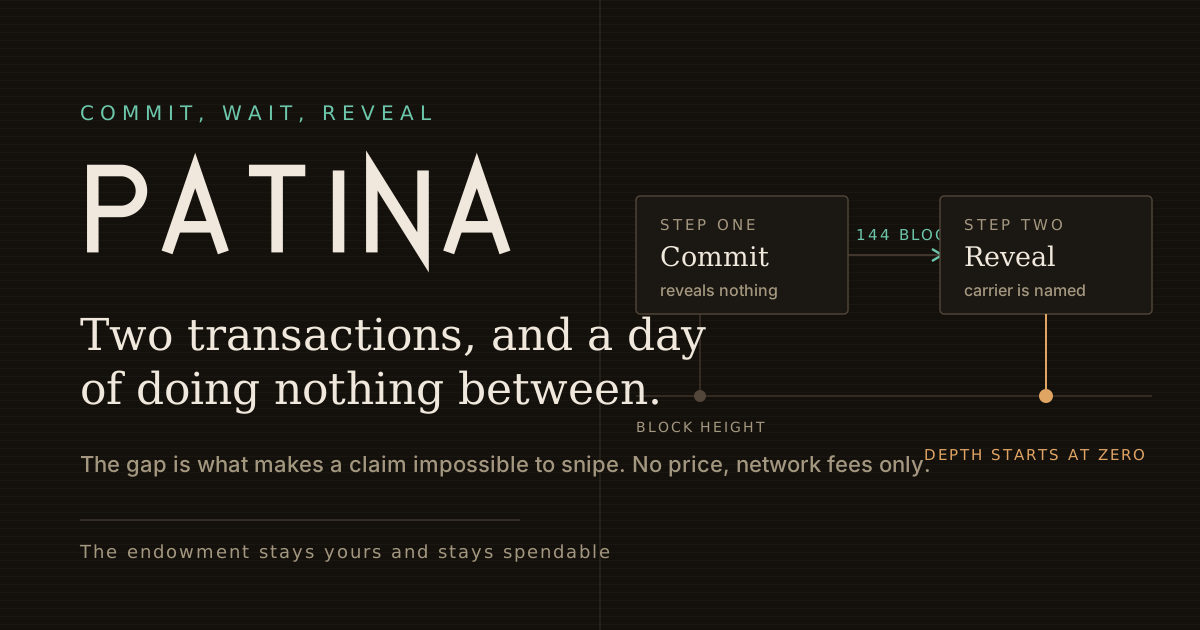
allocation to the people who built the protocol. Claiming uses an aged commit
and reveal: the commit output must be at least 144 blocks old before the reveal
can spend it, and only the committer can spend it, which makes a claim
impossible to snipe and removes any advantage to acting at a particular
second. A founding carrier must hold at least 100 000 sats of the minter's own
bitcoin. That bitcoin is not paid to anyone. It stays theirs, spendable at any
time, and spending it resets the depth.

PATINA is explicit about what it does not do. Depth proves that an outpoint has
not moved, and with a signed attestation over the artifact id and a recent
block hash it also shows the key is alive. It does not prove that the same
person held it throughout, because keys can be sold off chain with nothing
recorded. Founding membership can be farmed by anyone willing to park real
bitcoin, so concentration figures are published live while the window is open
rather than after it closes. Buying an artifact moves it, which resets its
depth. PATINA is built by Bitcoin Universe, and neither Bitcoin Universe nor
anyone else can pause the protocol, freeze an artifact or reverse a spend.
Names and spelling
- The protocol
- PATINA in running text, in capitals.
- The genesis asset
- Firstlight Seals, one word for Firstlight.
- The tiers
- Raw, Sheen, Cast, Verdigris, Umber, Bronze, Oxide, Elder.
- Depth
- Measured in blocks, never in days. Days are always an estimate.
- Release numbers
- There is no version number in the name. Please do not add one.
02 The files
Seven files, all of them hand authored SVG.
They scale to any size and stay sharp in print. There is no binary asset anywhere in this kit and no build step behind it.




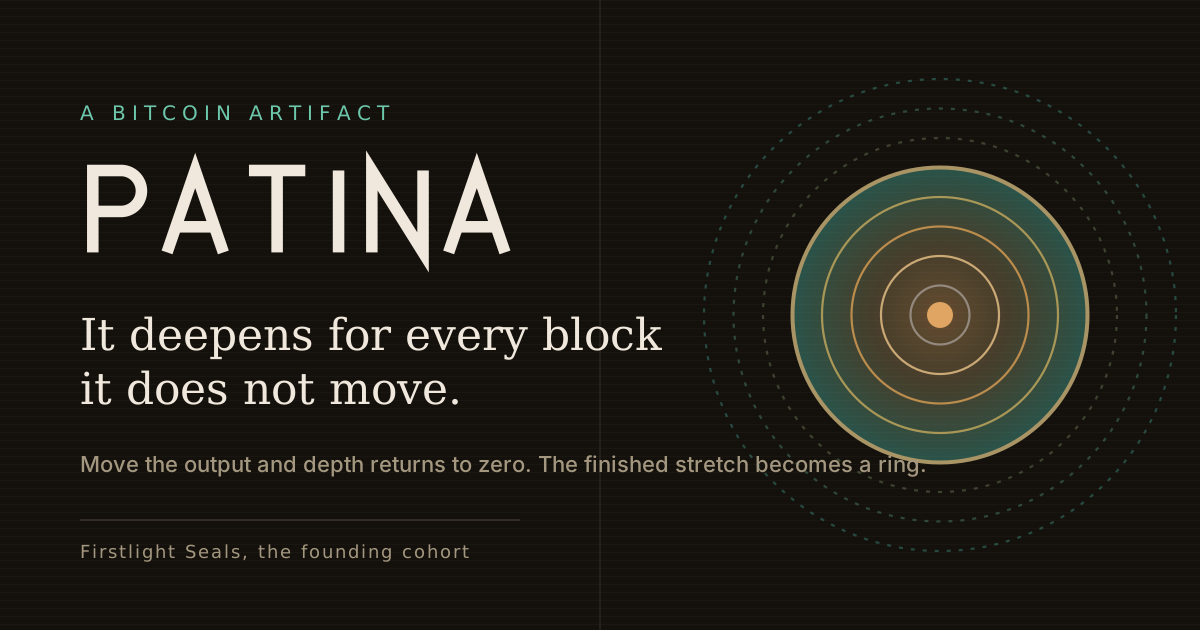
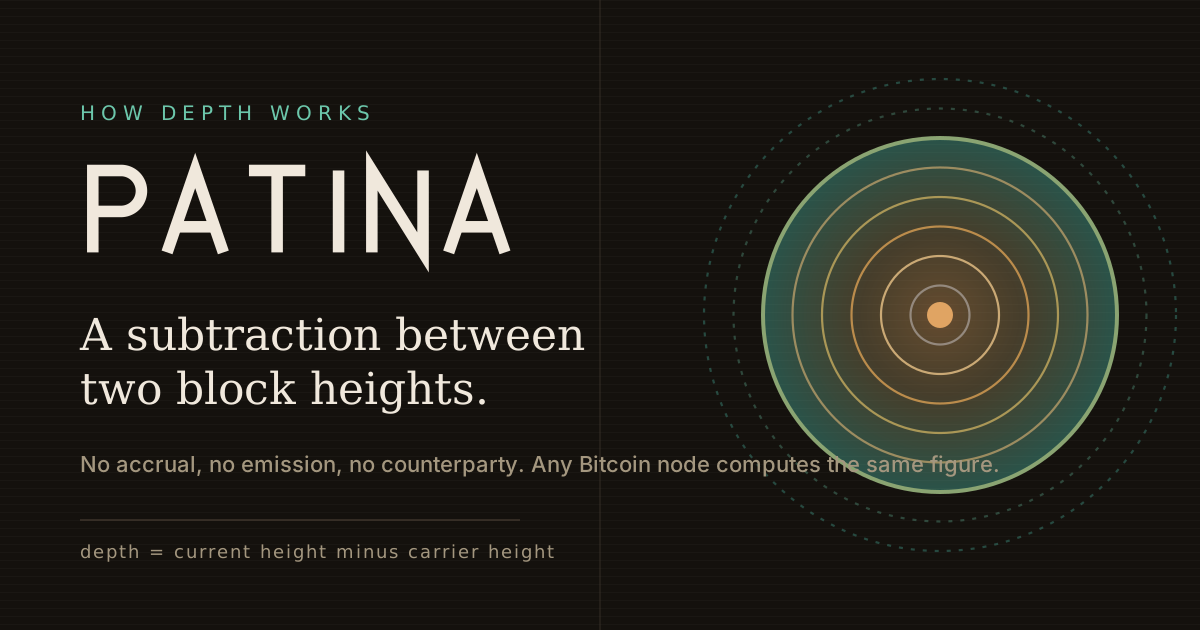
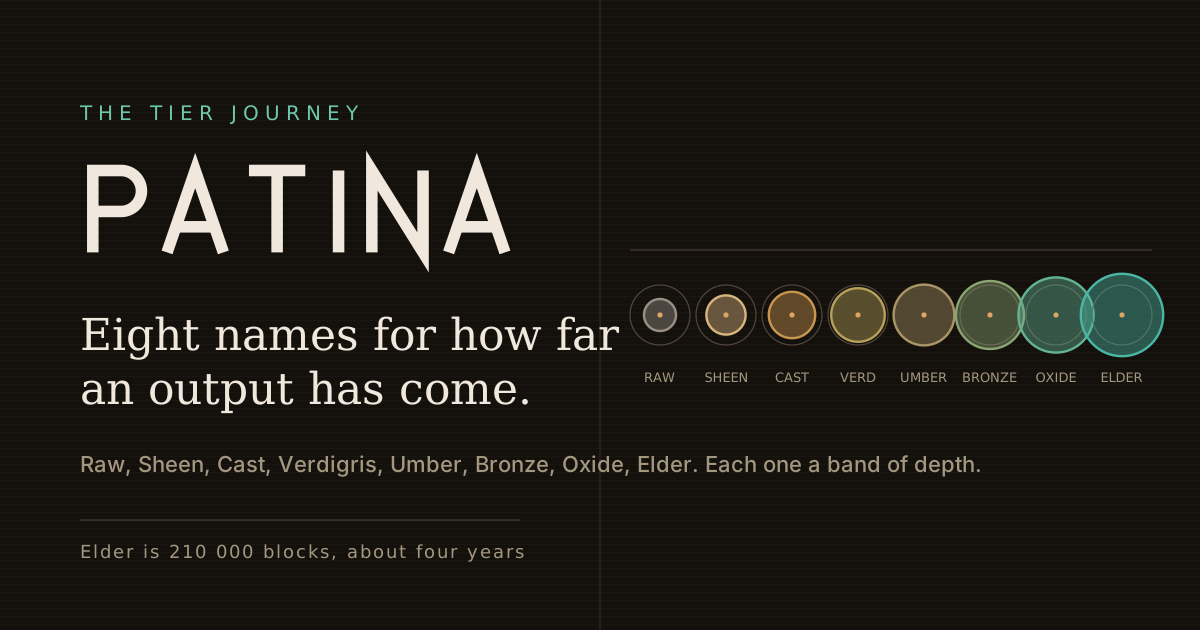
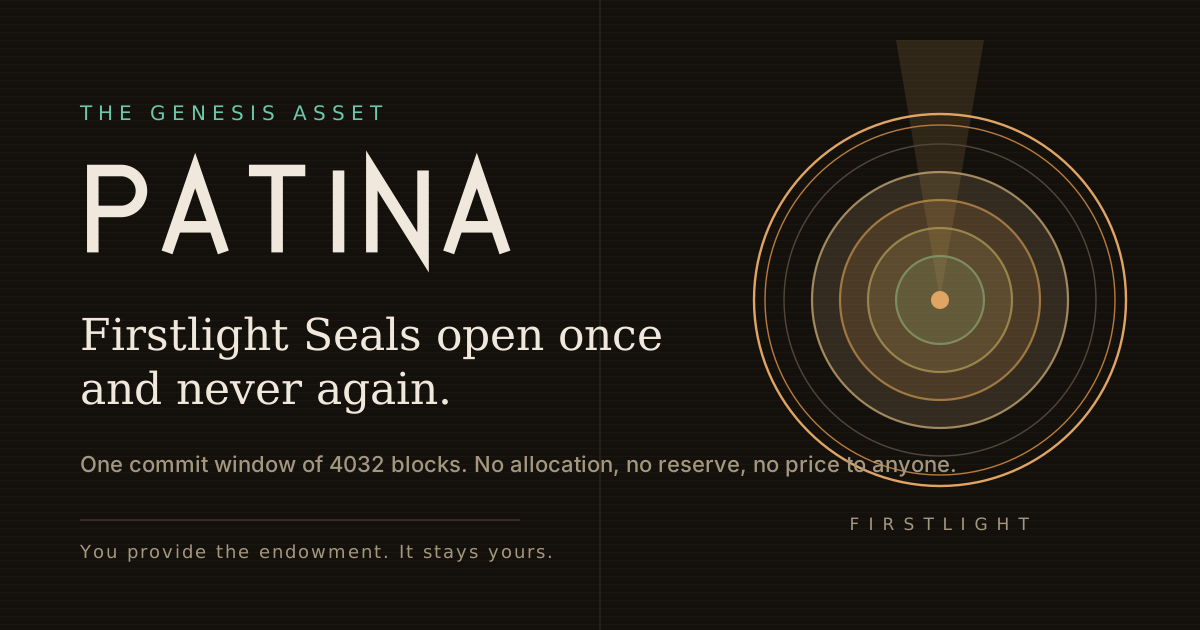
If you are publishing a link preview
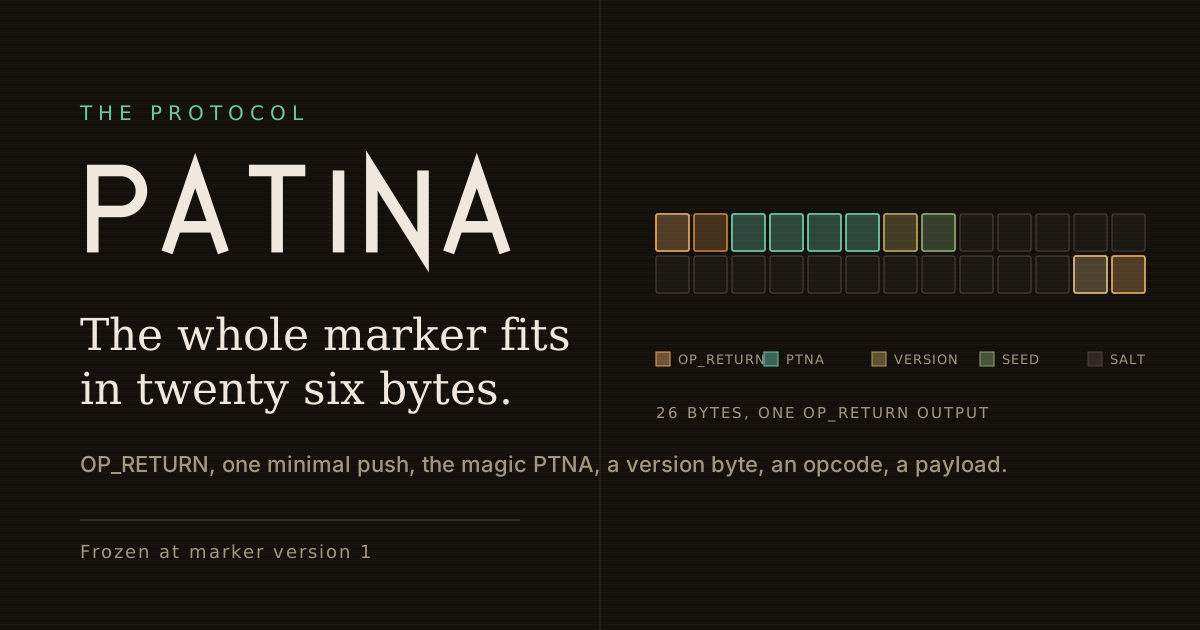
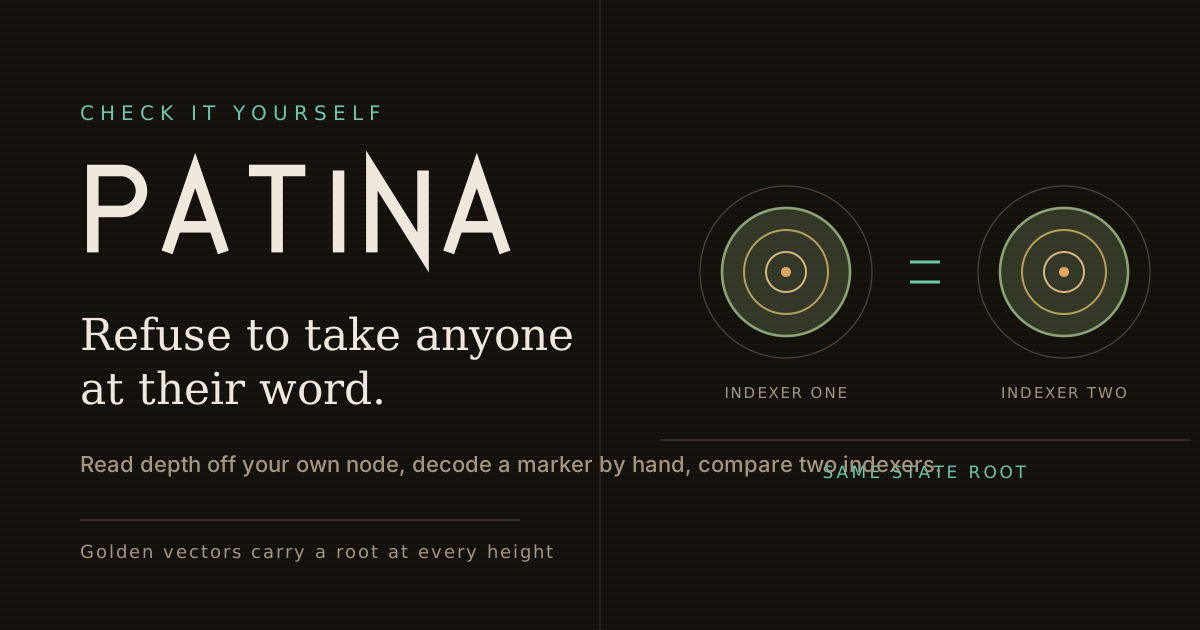
These cards are SVG, because this site ships no build step and no binary assets. Most social platforms only render raster previews, so export the card you need to PNG at 1200 by 630 before you publish. Nothing about the artwork changes when you do.
03 Colour and type
The palette is a set of tokens, not a mood board.
Five interface colours and one eight step ramp, one stop per tier. Every value below is read out of assets/site.css, and every value has a dark reading and a light one because the light theme is designed rather than inverted.
Interface colours
- bg
- ink
- bronze
- verdigris
- umber
| Token | Where it lands | Dark | Light |
|---|---|---|---|
| bg | The page ground everything sits on. | #14110d | #f3eee3 |
| ink | Body text and headings. | #f0e8dc | #1d1811 |
| bronze | Links, accents, the core of the mark. | #e0a463 | #86500f |
| verdigris | Live state, hover, anything that means kept. | #6cc7ab | #0e6250 |
| umber | Warnings and anything that means lost. | #c08658 | #7c4a22 |
The tier ramp
Cold raw metal at the bottom, cast bronze and earth through the middle, verdigris at the top. The swatches take their colour from the stylesheet, so what you see here is what the site draws.
- t0 Raw
- t1 Sheen
- t2 Cast
- t3 Verdigris
- t4 Umber
- t5 Bronze
- t6 Oxide
- t7 Elder
| Token | Tier | Dark | Light |
|---|---|---|---|
| t0 | Raw | #9a9086 | #5b544c |
| t1 | Sheen | #d8b57e | #8a6117 |
| t2 | Cast | #c9954f | #7d5410 |
| t3 | Verdigris | #b6a05a | #695a17 |
| t4 | Umber | #a89464 | #61511d |
| t5 | Bronze | #8aa472 | #435f33 |
| t6 | Oxide | #63b294 | #1c6a53 |
| t7 | Elder | #4ab7a4 | #135f4d |
Two things that trip people up
The tier named Bronze and the interface colour named bronze are different values. The interface colour runs links and accents, the tier is a stop on the ramp at 52 560 blocks.
Three tier names also read as colour words, so Verdigris, Umber and Bronze can mean either a depth band or a swatch. In running text, say tier when you mean the band.
Type
Typography is a system serif for headings, the system interface font for body text and a system monospace for anything numeric. No web fonts are loaded anywhere on this site, so there is no font file to license or ship.
04 Usage rules
Use the marks freely. Do not use them to borrow our name.
Critical coverage needs no permission from anyone here. The lines below exist to stop a reader mistaking your project for ours, and nothing else.
Please do
- Use the assets as they are, at any size, in any medium.
- Recolour the wordmark to a single flat colour when a layout needs it.
- Leave clear space around the mark equal to the radius of its innermost ring.
- Link to this site when you quote it. Nothing here is behind a paywall.
- Say what you actually think. Critical coverage does not need our permission.
Please do not
- Stretch, skew, rotate or add effects to the wordmark or the mark.
- Redraw the mark with a different ring count. The strata carry meaning.
- Use the assets to imply that Bitcoin Universe endorses, audits or partners with your project.
- Put the mark on a product that sells, custodies or lends artifacts.
- Add a version number to the name anywhere.
- Combine the assets with price predictions, return figures or invented statistics.
Facts worth checking before you publish
- There is no mint price, no supply cap, no team allocation and no reserve.
- Depth resets on any movement, including a sale.
- The founding cohort can be farmed by anyone with bitcoin to park.
- All eight tier thresholds are on the protocol page, in blocks.
- Any number you have seen about live activity should come from an indexer, not from us. Here is how to query one.
05 Before you file
Where to check a claim rather than trust one.
Each of these pages exists so a sentence in your piece can be sourced to something other than a press release.
- I need the mechanism Protocol Marker byte layout, the commit leaf, successor selection, rings, reason codes and reorg behaviour.
- I need to check a number Verify Read depth off your own node, decode a marker by hand, and cross check two indexers against each other.
- I want the downside Risks Every way PATINA can disappoint you, gathered on one page instead of buried in a footnote.
- I am writing about control Transparency Supply rules, zero allocations, who holds what authority, and what the kill switches can and cannot reach.
- I need the tier names Tiers Every tier, with its material, its threshold in blocks and the arithmetic behind it.
- I am covering the mint Firstlight Seals What the founding cohort is, what a claimer provides, and what closes when the window closes.
- I want the short answers Questions Plain answers to what comes up most, including what ownership does not guarantee.
- I need a definition Glossary Carrier, stretch, ring, relic and the rest of the vocabulary, defined once and used consistently.
06 Contact
Where to ask, and which answers stay public.
Brand and press questions go to legal@bitcoinuniverse.io. Technical questions are better as an issue on the protocol repository, where the answer is public and stays findable.
If you are quoting a live figure, ask an indexer rather than asking us. The endpoint reference shows every request and response shape.